

What Slugs Can Teach Us About Finding Our Place in Nature

In a world where we're constantly bombarded by stimuli and our nervous systems rarely get a chance to rest, there's something profound to be learned from observing the quiet wisdom of nature's smallest creatures. Today, I'd like to share a story from this week that taught me about the importance of belonging, natural rhythms, and honoring the inherent wisdom of all living things.
When We Impose Our Ideas on Nature
Our nervous systems are finely tuned to seek safety, connection, and belonging. We build elaborate structures, both physical and mental, to create the conditions we believe will satisfy these needs. But what happens when we project our needs onto others, especially onto the creatures with whom we share this planet?
The Great Slug Swimming Pool
Once upon a time, two imaginative children hatched a grand plan during their morning walk to school.
"We should build a slug world!" whispered Lucy excitedly.
"Yes! With slug hotels where they can check in with tiny suitcases!" replied her brother Ellis.
"And slug restaurants with menus made of leaves!"
"Oh! And slug swimming pools filled with... um... whatever slugs like to swim in!"
Their mother, who had been quietly lost in her own world of planning lessons for the day, couldn't help herself any longer.
"I wonder if the slugs will like that very much," she suggested gently.
The children turned to her with expressions of complete bewilderment.
"Why wouldn't they like it, Mama? Of course they would," they insisted absolute certainty.
"Well," said Mama, "sometimes what we think others want isn't what they really need. Slugs already have homes they love in nature."
The children nodded thoughtfully, but their eyes still sparkled with plans.
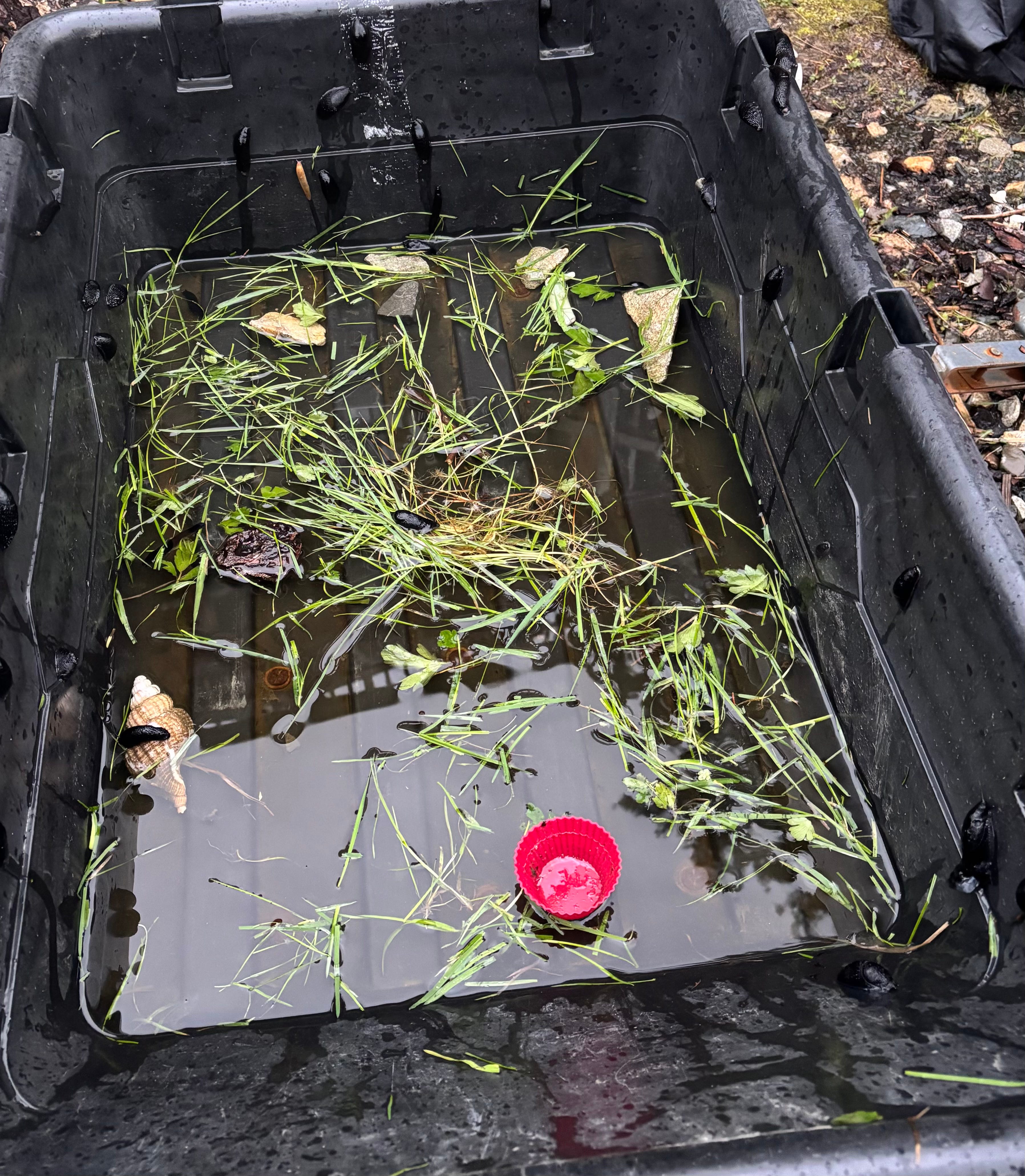
That afternoon while Mama was away, Lucy and Ellis built the most magnificent Slug Resort & Spa anyone had ever seen. They created tiny rooms from leaves, restaurants from twigs, and even a swimming pool from the wagon filled with water.
"The slugs will be so happy here!" they declared, carefully placing approximately 25 slugs they had found into their new paradise.
But as evening fell, something unexpected happened. One by one, the slugs began to leave. They crawled up the walls and across the garden, leaving shimmering trails behind them.
When Mama returned home, she found Lucy and Ellis watching the last slug disappear into a patch of wild flowers.
"I don't understand," said Ellis. "We built them everything we thought they would want."
Lucy smiled. "Sometimes the best home isn't the fanciest one, but the one where you truly belong."
"Like how we belong in our house, and slugs belong in the garden?" asked Ellis.
"Exactly," said Mama. "Each creature knows best where they're happiest."
The next day, instead of building another resort, the children created a beautiful garden path where they could watch the slugs in their natural home. They learned the slugs' favorite plants and left little treats of lettuce leaves.
And sometimes, if they were very patient, they could see the slugs going about their peaceful slug lives, not in a human-made resort, but in the perfect home that nature had already provided.
"I think they're happier this way," whispered Ellis.
Lucy nodded. "And now we can be their friends instead of their builders."
And that, as it turned out, was the very best plan of all.
Photo: Approximately two dozen slugs escaping from the swimming pool.
The Wisdom of Our Nervous System
There's something profound about the slugs' instinctive behavior in the story. Despite the well-intentioned human-designed "paradise," their nervous systems guided them back to where they truly belonged. In their own quiet way, the slugs demonstrated a wisdom that we humans often override in ourselves.
Our own nervous systems contain similar intelligence. When we feel uncomfortable, stressed, or out of place, our bodies send us signals…tension, fatigue, anxiety, restlessness. These are our own equivalent of the slugs' slow, determined crawl back to their natural habitat.
Yet how often do we ignore these signals? How frequently do we push through discomfort because we've built elaborate mental constructs about where we "should" be and what we "should" want?
Finding Our Natural Habitat
The children in our story learned a beautiful lesson: sometimes the most loving thing we can do is observe and support rather than impose and construct. By shifting from resort builders to friends and observers, they found a more authentic connection with the slugs and, by extension, with nature itself.
This wisdom applies to our relationships with ourselves, with others, and with the natural world. Our nervous systems are constantly communicating with us, guiding us toward environments where we can truly thrive. When we learn to listen to these signals with the same curiosity and openness as the children watching their slug friends, we begin to discover our own authentic path.
Next time you feel that subtle discomfort, that gentle nudge from your nervous system suggesting "this isn't quite right," consider the slugs. Perhaps, like them, your body knows exactly where you belong, even when your mind has constructed an elaborate resort of "shoulds" and expectations.
Where is your patch of wildflowers? What would it mean to crawl, slowly but determinedly, toward the place where you truly belong?
How have you noticed your nervous system guiding you toward or away from certain environments? I'd love to hear your stories in the comments below.